POL (Passive Optical LAN) : the fiber LAN for businesses in 2026
Contents
Traditional Ethernet cabling (Cat 6/6A/7) has its limits : 100 m max per link, thick cable bundles, high renovation costs in existing buildings, a growing number of switches and their maintenance. In large infrastructures (hotels, hospitals, universities, office towers), these limits become critical when upgrading for 4K, WiFi 6 or IoT.
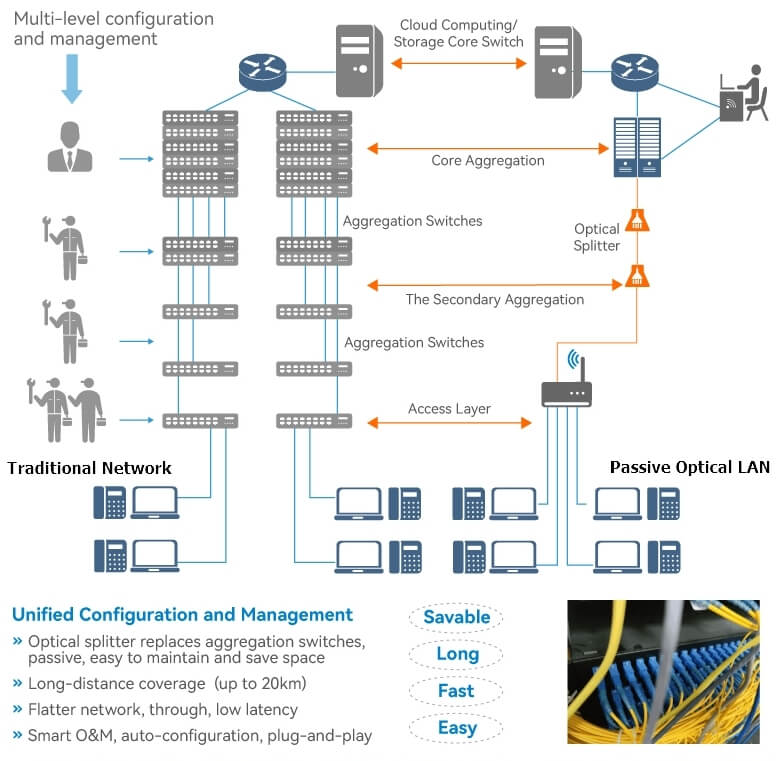
POL (Passive Optical LAN) addresses these problems by applying the PON (Passive Optical Network) architecture to the corporate local network. Less copper, more reach, lower consumption. This guide details the principle, the benefits, the typical architecture and the use cases where POL stands out against classic Ethernet.
What is a POL ?
The POL (Passive Optical LAN) is a local network architecture based on PON technology (Passive Optical Network), identical to the one used in carrier FTTH. Characteristics :
- Uses single-mode fibers and passive splitters (no power supply)
- Point-to-multipoint (P2MP) architecture from the central OLT to the user ONUs
- WDM multiplexing for bidirectional communication (1490 nm downstream, 1310 nm upstream)
- Suitable for any type of service : LAN, WiFi, IPTV, VoIP, video surveillance, access control
Benefits of the Passive Optical LAN
1. Long-distance reach
Single-mode fiber enables links up to 20 km without a repeater (even more with SFP ER or ZR modules). It is perfect for a university campus, a multi-building hospital, or an industrial park. Cat 6 Ethernet tops out at 100 m, forcing the installation of intermediate switches.
2. Network simplification
POL replaces the traditional "core → distribution → access" topology (3 levels of switches) with a flattened hub-and-spoke architecture : a central OLT + splitters + ONUs. Result :
- Fewer active devices to manage (-50% on average)
- Rarer outages (the splitters are passive, no electronic failure)
- Simplified moves and additions
3. Enhanced security
POL natively integrates :
- AES-128 encryption between OLT and ONU
- MAC binding, 802.1X authentication
- Built-in anti-DoS
- Impossible to physically tap a fiber without detection (immediate drop in optical power)
4. Savings and energy efficiency
A POL network consumes 40-60% less electricity than an equivalent Ethernet LAN, because :
- The splitters are passive (0 W)
- Fewer active switches in the chain
- Modern ONUs are very economical (5-10 W)
- Less air conditioning needed (less heat dissipated)
Scalability bonus : POL moves easily from 2.5 Gbps GPON to 10G XGS-PON, then to 25G-PON/50G-PON, without changing the fiber cabling. Only the OLT and ONU evolve.
Typical POL architecture
A classic POL architecture for a building of 50-500 users :
| Step | Equipment | Role |
|---|---|---|
| 1 | Core switch 10G/40G | Uplink to the Internet + firewall router |
| 2 | OLT GPON 4-16 ports | Fiber termination on the datacenter side |
| 3 | SC/APC patch cords | OLT → splitter connection |
| 4 | PLC splitters 1:8/16/32 | Distribution per floor or zone |
| 5 | Single-mode fiber (OS2) | Horizontal cabling to the rooms |
| 6 | ONU HGU or SFU | Terminal in each office, room, hall |
| 7 | Short Cat 6 Ethernet cable | From the ONU to the end devices (PC, phone, camera) |
| 8 | Outdoor/indoor WiFi 6 AP | WiFi coverage, often PoE-powered |
With a POL, a hotel room needs only a single fiber for all its services : IP TV, WiFi, VoIP phone, connected lock, thermostat. Versus 4-8 Cat 6 cables in traditional Ethernet.
Use cases : hotel, campus, office
1. Hotels and residences
Textbook case for POL :
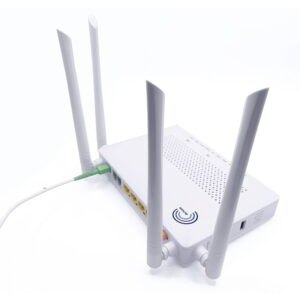
- One room = 1 fiber + 1 HGU WiFi 6
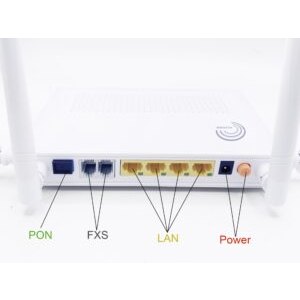
- The HGU provides high-speed Internet, WiFi 6, IP TV, VoIP and access control (connected lock) in the room
- The corridors, lobbies and meeting rooms get their own ONU + WiFi 6 AP
- Adding/removing rooms is fast, without removing the cabling
2. University campuses and hospitals
POL naturally covers several buildings across several hectares, thanks to the reach of fiber :
- Central OLT in the main server room
- 1:32 splitters per building or per floor
- ONU in each classroom, medical office or lecture hall
- Integration of IoT services (environmental sensors, badges, cameras)
3. Office towers
In a building > 15 floors, Cat 6 Ethernet becomes costly (a technical room per floor). A single POL from the ground floor serves all floors via per-landing splitters. Fewer technical rooms, less air conditioning, less maintenance.
4. Commercial complexes / event centers
For shopping malls, exhibition centers, museums : POL handles variable connectivity (event-based occupancy) with mobile/portable ONUs plugged into the splitters on demand.
Elfcam POL solution
Our complete POL range :
Elfcam POL chain
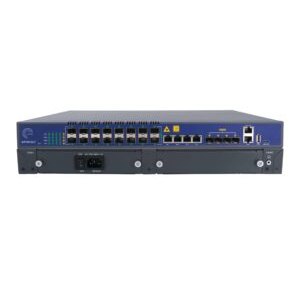
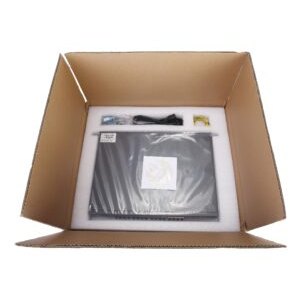
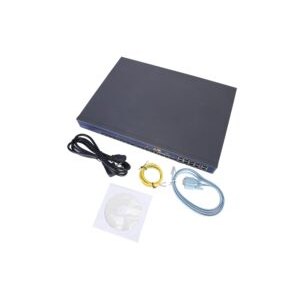
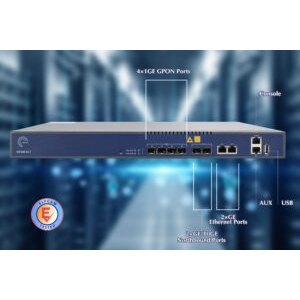
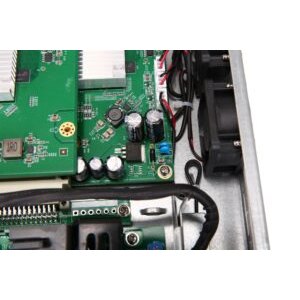
- OLT GPON 4 ports — hotel, campus up to 256 subscribers
- OLT GPON 8 ports — residence, university campus up to 512 subscribers
- OLT GPON 16 ports — office tower, city up to 2048 subscribers
- OLT EPON 4 ports — corporate POL, IEEE ecosystem
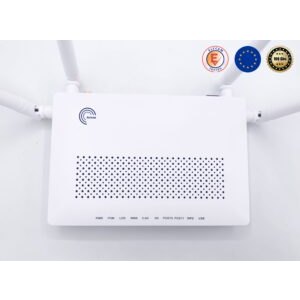
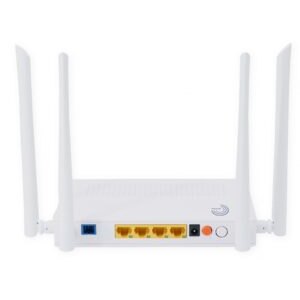
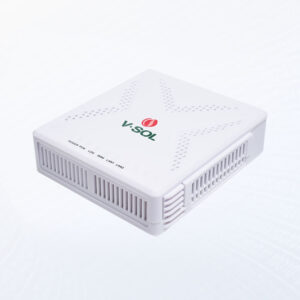
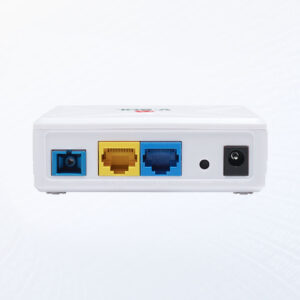
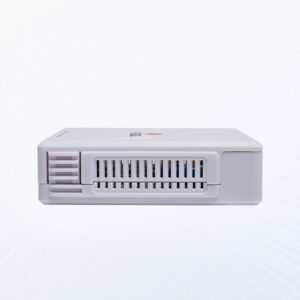
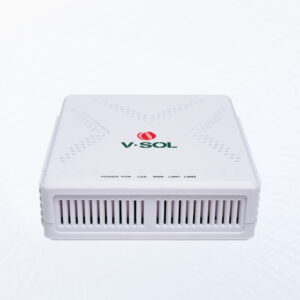
- HGU WiFi 6 all-in-one — ideal ONU for a room or office
- ONU SFU 2.5 GbE — for a pro office or server room
- ONU PoE XPON — for high-mounted or corridor installation
- PLC splitters 1:8 to 1:64 — distribution per floor
- SC/APC patch cords — for local connection
- PoE switches — for cameras and APs
POL vs traditional copper Ethernet
| Criterion | POL (fiber) | Ethernet Cat 6/6A/7 |
|---|---|---|
| Max distance | 20 km+ | 100 m |
| Max speed | 10 Gbps (XGS-PON) | 10 Gbps (Cat 6A) |
| Speed scalability | Excellent (just change OLT/ONU) | Limited (recabling required) |
| Electrical consumption | -40 to -60% | Baseline |
| Cable bulk | Ultra-thin fiber | Thick Cat 6 bundles |
| Technical rooms | 1 central + passive splitters | 1 per floor with active switches |
| Security | Native (AES-128, physical) | Depends on the managed switch |
| Initial cost | +15-30% | Baseline |
| 10-year operating cost | -30% | Baseline |
| EM interference | None | Possible (motors, power supply) |
POL ROI : return on investment in 3-5 years
A 2023 Deloitte study on university campuses : POL becomes profitable in 3-5 years compared to traditional Ethernet recabling, thanks to operating savings (electricity, maintenance, air conditioning). Over 10 years, the TCO is 25-35% lower.
FAQ — Passive Optical LAN
1POL vs classic FTTH, what is the difference ?
- Carrier FTTH : serves paying subscribers, managed by a telecom operator, public Internet connectivity
- POL : deployed by a company or public body for its own use (private LAN), managed in-house
2Is POL suitable for all buildings ?
- Very profitable : > 50 terminals + long distances (> 100 m), great height, building to renovate
- Less relevant : small offices (< 10 workstations), recent building already cabled with Cat 6A
3Can I combine POL and Ethernet ?
4Does POL support WiFi 6 ?
5How does a POL evolve from GPON to XGS-PON ?
- Replace the GPON OLT with an XGS-PON OLT (or a GPON+XGS-PON combo)
- Gradually replace the GPON ONUs with XGS-PON ONUs
- The fiber cabling and the passive splitters do not change
6Who installs and maintains a POL ?
- Specialized telecom integrator (Cisco, Huawei, Nokia, Zyxel partners)
- Certified fiber installer for pulling and splicing
- Internal IT team for OLT and ONU configuration
7Is POL a mature technology ?
8Elfcam delivery and support for a POL project ?
In summary
POL (Passive Optical LAN) is the corporate version of PON : P2MP fiber architecture, passive splitters, one ONU per user. Its major benefits : 20 km+ reach, consumption reduced by 40-60%, scalability (GPON → XGS-PON → 50G-PON) without recabling.
Ideal for hotels, campuses, hospitals, office towers, shopping malls. To deploy your POL, combine an OLT GPON multi-port, PLC splitters, HGU WiFi 6 or SFU 2.5GbE as needed. Profitable from 50 users, with a TCO 25-35% lower than traditional Ethernet over 10 years.