Gesundheitsrisiken Glasfaser: Fasersplitter, Laser, Chemie — Leitfaden zur Prävention

Inhaltsverzeichnis
- Fasersplitter aus Silica: das Risiko Nr. 1
- Laserrisiko: niemals in eine aktive Faser blicken
- Inhalation und Hautkontakt
- Chemische Risiken: Acrylat, IPA und Mäntel
- Bewährte Praktiken IEC/INRS auf der Baustelle
- Empfohlene PSA (Persönliche Schutzausrüstung) und geeignete Werkzeuge
- Reinigung der Steckverbinder: spezifische Risiken
- FAQ
Glasfaser ist nicht gefährlich wie ein unter Spannung stehendes Kabel. Es gibt kein Risiko eines Stromschlags, kein Magnetfeld, keine Funkwellen. Aber dieser Ruf als „harmloses Kabel" führt dazu, dass viele Techniker die tatsächlichen Risiken unterschätzen — die es gibt, die spezifisch sind und präzise Handgriffe erfordern.
Vier Arten von Risiken sind durch das INRS und die Normen IEC 60825 dokumentiert: die Fasersplitter aus Silica, die Exposition gegenüber aktiven Lasern, die Inhalation von Glaspartikeln und die chemische Exposition gegenüber Beschichtungen. Dieser Leitfaden beschreibt sie einzeln, mit konkreten Präventionsmaßnahmen.
Ein Splitter einer Monomode-Glasfaser misst 9 µm im Durchmesser — zehnmal weniger als ein Haar. Er ist unsichtbar, geruchlos und kann sich ohne sofortigen Schmerz in die Haut oder die Hornhaut bohren.
Fasersplitter aus Silica: das Risiko Nr. 1 auf der Glasfaser-Baustelle
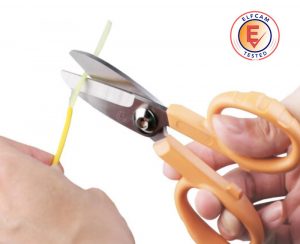
Glasfaser besteht aus Silica (SiO₂) — einem sehr reinen Glas, das nach dem Abisolieren außerordentlich zerbrechlich ist. Beim Cleaven, Abisolieren oder versehentlichen Bruch einer Faser werden Splitter von einigen Mikrometern bis zu einigen Millimetern in alle Richtungen geschleudert. Die kleinsten sind mit bloßem Auge unsichtbar.
Diese Splitter weisen drei Eintrittswege in den Organismus auf:
- Haut: Splitter unter 50 µm können ohne sofortigen Schmerz eindringen, wie Glassplitter. Sie infizieren sich leicht und sind schwer zu entfernen, da sie durchsichtig und ohne radiologischen Kontrast sind.
- Augen: Ein beim Cleaven geschleuderter Splitter kann die Hornhaut über mehrere Dutzend Zentimeter erreichen. Der Schmerz tritt verzögert auf. Kontaktlinsen sind besonders gefährlich, da sie die Partikel gegen die Hornhaut festhalten.
- Verdauungswege: Techniker, die in der Nähe eines Glasfaser-Arbeitsbereichs essen, trinken oder die Hände zum Mund führen, können auf Oberflächen oder ihren eigenen Fingern abgelagerte Splitter verschlucken.
Absolute Regel
Jede Oberfläche, auf der Fasern gecleavt wurden, ist eine kontaminierte Oberfläche. Niemals eine Cleave-Oberfläche mit der Hand abwischen. Faserreste in einem hermetischen Behälter (Röhrchen oder geschlossene Dose) auffangen, niemals in einem offenen Mülleimer, aus dem sie erneut geschleudert werden könnten.
Laserrisiko: niemals in eine aktive Faser blicken
Glasfasern transportieren mit bloßem Auge unsichtbares Laserlicht (1310 nm und 1550 nm bei Monomode-Verbindungen). Dieses Infrarotlicht löst nicht den Lidschlussreflex aus wie sichtbares Licht — es kann die Netzhaut verbrennen, bevor Sie Zeit haben zu reagieren.
Selbst ein Signal geringer Leistung ist potenziell gefährlich: Ein Standard-SFP+-Sender emittiert zwischen −5 und +2 dBm (0,3 bis 1,6 mW). Die Norm IEC 60825-2 klassifiziert diese Quellen als Klasse 1 (sicher bei normaler Verwendung) oder Klasse 1M (gefährlich bei Verwendung optischer Instrumente). Aber jede Bündelung durch eine blanke Faser oder eine Linse hebt diese Leistung auf netzhautgefährdende Niveaus.
- Niemals direkt in eine Faser blicken — aktiv oder vermeintlich inaktiv (Überprüfung mit bloßem Auge unmöglich).
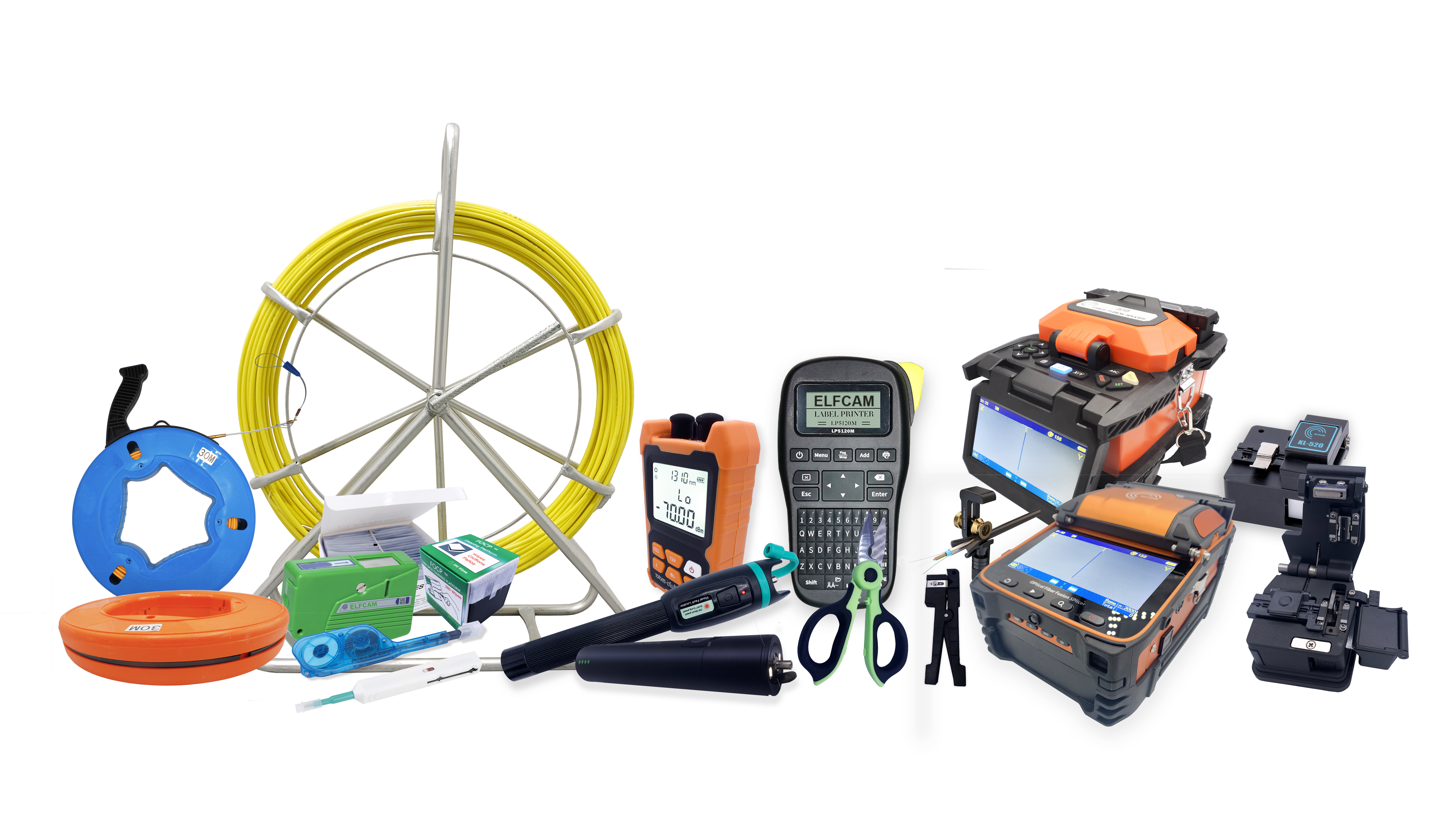
- Einen optischen Lichtdetektor (Visual Fault Locator) oder ein Leistungsmessgerät verwenden, niemals das Auge.
- Die Laserquelle deaktivieren, bevor ein Kabel verbunden oder getrennt wird.
- Die Laserschutzbrillen für 1310/1550 nm unterscheiden sich von gewöhnlichen Sicherheitsbrillen — die geeignete OD-Kennzeichnung (Optical Density) überprüfen.
Inhalation und Hautkontakt: was das INRS sagt
Das amorphe Silica (reines Silica-Glas) ist weniger gefährlich als das kristalline Silica (Quarz), das für die Silikose verantwortlich ist. Allerdings klassifiziert das INRS die Glasfasern als künstliche alveolengängige Fasern, wenn ihre Fragmente weniger als 3 µm im Durchmesser betragen — Abmessungen, die ein tiefes Eindringen in die Lungenalveolen ermöglichen.
In der Praxis erzeugen FTTH-Baustellen im Innenbereich bei den gängigen Arbeiten (Verlegung vorgecleavter Patchkabel) wenig Faseraerosole. Das Atemwegsrisiko hängt hauptsächlich mit den Arbeiten des Spleißens, des Serien-Cleavens und des Polierens von Steckverbindern ohne ausreichende Belüftung zusammen. Techniker, die diese Arbeiten regelmäßig durchführen, sollten als Vorsichtsmaßnahme eine FFP2-Maske tragen.
Bewährte Praxis
Nach jeder Bearbeitung blanker Faser die Hände mit kaltem Wasser waschen (nicht warm — offene Poren halten die Partikel besser fest), bevor Gesicht, Augen oder Nahrung berührt werden. Ein über die Finger gezogenes Klebeband entfernt die mikroskopischen Splitter wirksam.
Chemische Risiken: Acrylat-Beschichtungen, IPA und Mäntel
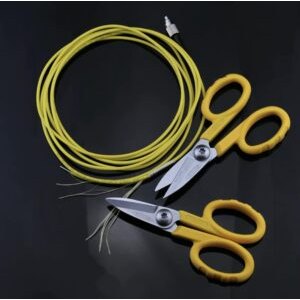
Die blanke Faser (nach dem Abisolieren) ist mit einer UV-Acrylat-Primärbeschichtung überzogen — einem Kunststoffharz, das bei längerem Kontakt leicht reizend ist. Diese Beschichtung wird mit thermischen oder mechanischen Abisolierwerkzeugen entfernt, und die Rückstände verbleiben auf den Werkzeugen und Arbeitsflächen.
Der Isopropylalkohol (IPA) ist das Standardlösungsmittel zur Reinigung von Steckverbindern und Ferrulen. Bei 70–99 % Konzentration ist er entzündlich (Flammpunkt 12 °C), reizend für die Augen und die Atemwege in geschlossenen Räumen. In einem belüfteten Bereich verwenden, fern von jeder Flamme oder jedem elektrischen Lichtbogen.
Bezüglich der Kabelmäntel:
- PVC-Mäntel: Beim Schneiden oder Erhitzen emittieren sie Chlorwasserstoff (HCl) und Dioxine. Jedes Heißschneiden vermeiden.
- LSZH-Mäntel (Low Smoke Zero Halogen): speziell so konzipiert, dass sie im Brandfall keine halogenierten Gase emittieren. Empfohlen in genutzten Räumen (Rechenzentren, HVAC).
- Gel von Kabeln mit losen Röhrchen: Das thixotrope Füllgel ist im Allgemeinen ungiftig, aber augenreizend. Bei der Bearbeitung Nitrilhandschuhe verwenden.


Bewährte Praktiken IEC/INRS: was auf der Baustelle angewendet werden muss
Die Normen IEC 60825-2 (Lasersicherheit) und die Empfehlungen INRS ED 127 (künstliche Mineralfasern) definieren einen präzisen Rahmen für Arbeiten an Glasfaser. Hier die nicht verhandelbaren Regeln:
| Arbeitsschritt | Hauptrisiko | Verpflichtende Maßnahme |
|---|---|---|
| Abisolieren blanker Faser | Silica-Splitter, Acrylat | Sicherheitsbrille, Nitrilhandschuhe, geschützte Arbeitsfläche |
| Cleaven | Splitterprojektion auf 30–60 cm | Brille, sofortiges Auffangen der Reste in hermetischem Behälter |
| Fusionsspleißen | UV-Lichtbogen, Splitter, Rauch | Schweißvisier oder NICHT in den Lichtbogen blicken, Belüftung |
| Steckverbinder-Inspektion (Auge) | Aktiver Laser | VERBOTEN — ein Inspektionsmikroskop mit Filter oder VFL verwenden |
| IPA-Reinigung | Dämpfe, Entflammbarkeit | Belüftung, Zündquellen fernhalten, Handschuhe |
| Polieren von Steckverbindern | Silica-Partikel, Acrylat | FFP2-Maske bei längerem Arbeitsgang, Absaugung |
| Mahlzeit / Pause im Arbeitsbereich | Verschlucken von Partikeln | VERBOTEN — den Bereich verlassen, Hände waschen |
| Tragen von Kontaktlinsen | Partikelretention | Nicht empfohlen — Korrekturbrille + Schutzbrille bevorzugen |
Empfohlene PSA (Persönliche Schutzausrüstung) und geeignete Werkzeuge
Für eine Standard-FTTH-Installation im Haushalt (Verlegung eines vorgecleavten SC/APC-Patchkabels) ist das Risiko gering und die grundlegende PSA (Persönliche Schutzausrüstung) ausreichend. Für Arbeiten des Spleißens, Serien-Cleavens oder Arbeiten im Tunnel/Dachboden muss die Ausrüstung vollständig sein.
- Sicherheitsbrille (EN 166): obligatorisch bei jeder Bearbeitung blanker Faser. Die Laserbrillen 1310/1550 nm (EN 207, OD 4+) sind separat und nur erforderlich, wenn aktive Quellen vorhanden sind.
- Dünne Nitrilhandschuhe (0,1 mm): ausreichend für Acrylat und Gel. Latex (Allergie) und dicke Handschuhe, die die für Präzisionsarbeit notwendige Fingerfertigkeit verringern, vermeiden.
- FFP2-Maske: für Serien-Cleaven und -Spleißen (> 30 Min.), in geschlossenen oder schlecht belüfteten Räumen.
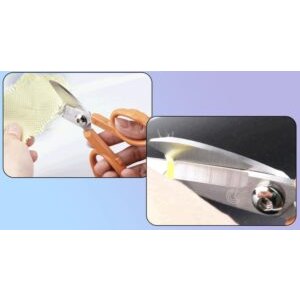
- Dunkle Arbeitsmatte: Die durchsichtigen Silica-Splitter sind auf schwarzem oder marineblauem Hintergrund sichtbar. Erleichtert das Auffangen und vermeidet die Kontamination der Oberflächen.
- Hermetischer Behälter: Jeder Abfall gecleavter Faser (Reste, gecleavte Enden) muss in einem verschlossenen Röhrchen oder einer geschlossenen Dose gesammelt werden, niemals in einem offenen Mülleimer.





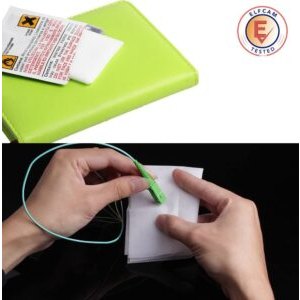
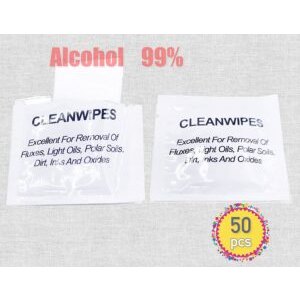
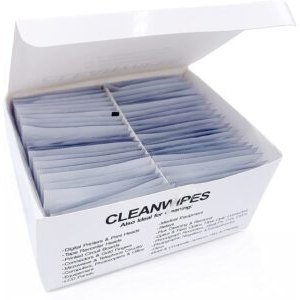
Reinigung der Steckverbinder: spezifische Risiken und Lösungen
Die Reinigung der Steckverbinder ist der häufigste Arbeitsschritt auf der FTTH-Baustelle — und derjenige, der am häufigsten ohne Schutz durchgeführt wird. Dennoch setzt eine verschmutzte Ferrule bei der Reinigung sowohl Silica-Rückstände (Polieren) als auch Fingeröl und manchmal frühere Kontaminationen (Gelstaub, verdunstetes IPA) frei.
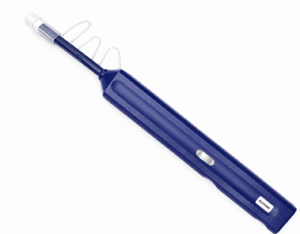
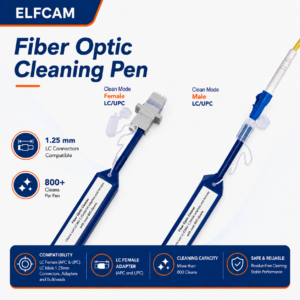
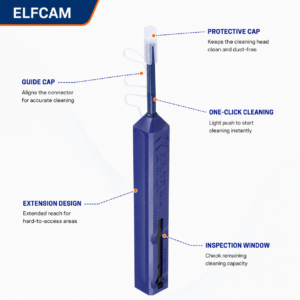
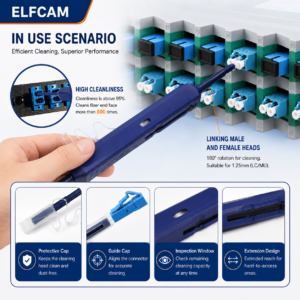
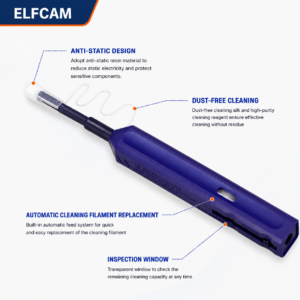
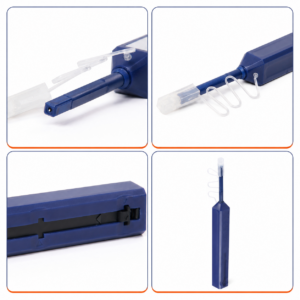
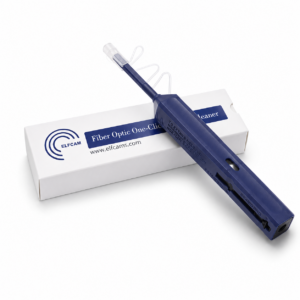
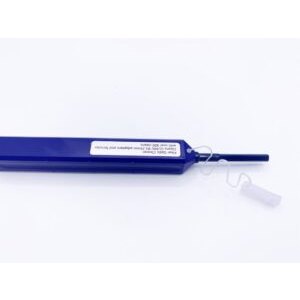
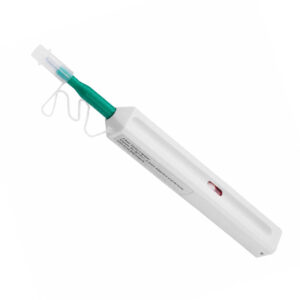
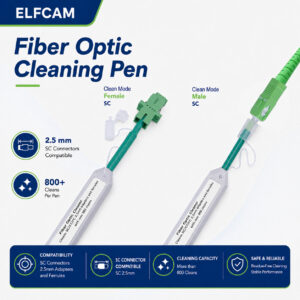
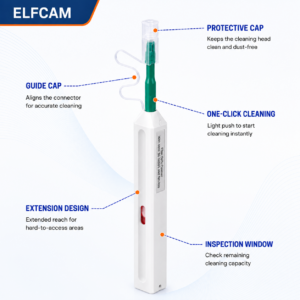
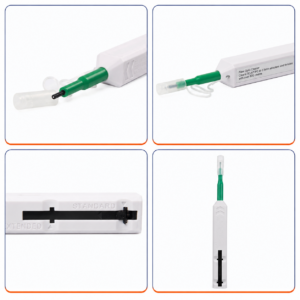
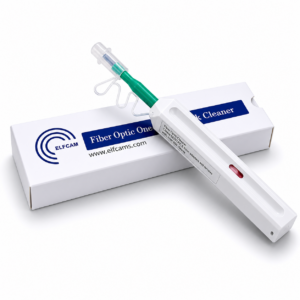
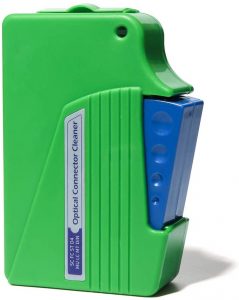
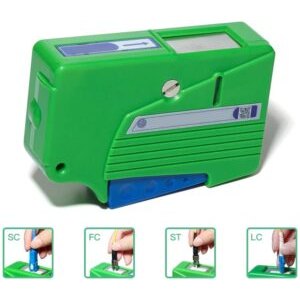
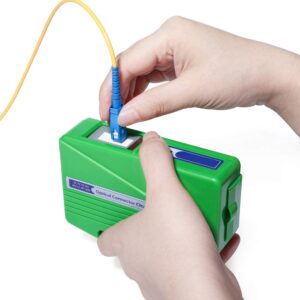
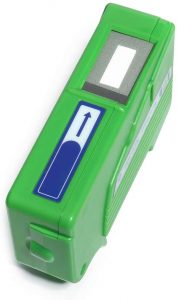
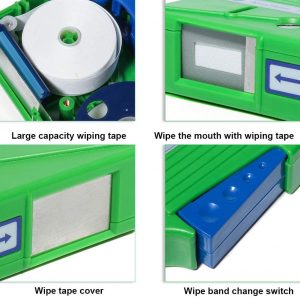
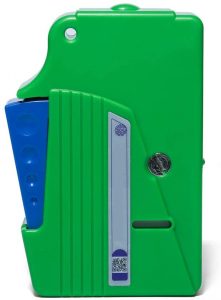
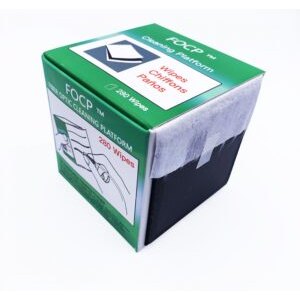
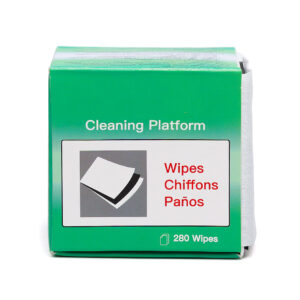
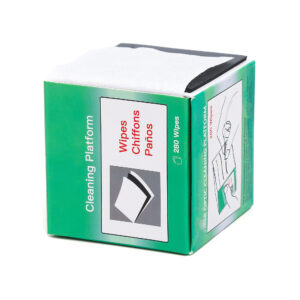
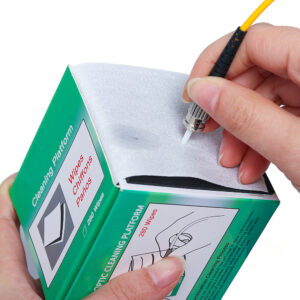
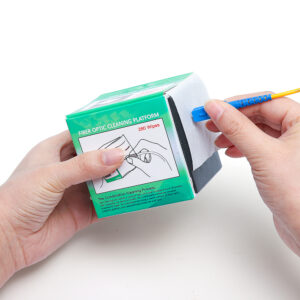
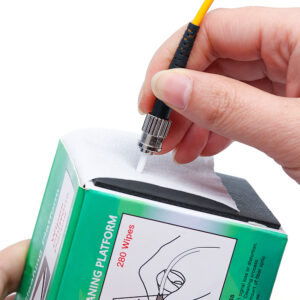
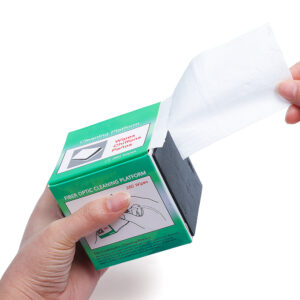
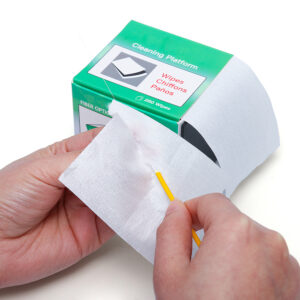
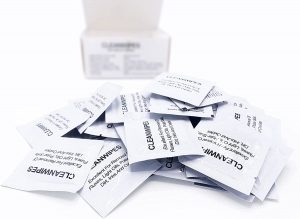
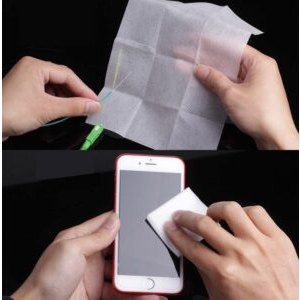
Die Reinigungsstifte mit einem Klick (Ref. 2735 für LC 1,25 mm, Ref. 2737 für SC/FC 2,5 mm) eliminieren den direkten Kontakt mit der Ferrule und reduzieren die Exposition gegenüber IPA. Jede Betätigung verschiebt das Reinigungsband zu einer unberührten Zone — mehr als 800 Reinigungen pro Stift. Für Baustellen mit großen Mengen decken die Universal-Reinigungsboxen (Ref. 7652) alle Steckverbinderformate ab.
Inspektion vor der Reinigung
Die Steckverbinder systematisch vor dem Anschließen inspizieren — ein kontaminierter Steckverbinder verschlechtert die Verbindung UND den gegenüberliegenden Steckverbinder. Ein Inspektionsmikroskop mit 200× und optischem Filter (niemals mit bloßem Auge auf eine aktive Faser) ermöglicht das Erkennen von Staub, Kratzern und Rissen. Gemäß IEC 61300-3-35 muss ein sauberer Steckverbinder im zentralen Bereich (0–25 µm) frei von Schmutz sein.