How to clean a fiber optic connector — methods, tools and mistakes to avoid
Contents
A dirty fiber optic connector is the leading cause of network performance degradation. Dust, oil, crystallized alcohol residue — a few micrograms of contamination on a 125 µm ferrule are enough to cause losses of 1 to 3 dB, parasitic reflections and intermittent outages that are impossible to diagnose without visual inspection.
This guide explains how to properly clean a fiber connector, which tools to use depending on the connector type (LC, SC, FC, MPO), how to inspect the result, and the mistakes that silently destroy your network performance. Across 40,000+ supported installations, we have found that 60% of link problems are solved by a simple, well-executed cleaning.
The IEC 61300-3-35 standard defines the acceptance criteria for inspected fiber connectors. Zone A (core): zero defects tolerated. Zone B (cladding): defects < 5 µm tolerated. Contamination in zone A causes measurable losses from 0.5 dB.
Why clean a fiber optic connector?
The useful surface of a fiber connector is the ferrule — a ceramic (zirconia) cylinder 2.5 mm (SC/FC/ST) or 1.25 mm (LC) in diameter whose polished end concentrates all the light transmission. The core of single-mode fiber is 9 µm in diameter — 10 times finer than a human hair.
A particle of household dust measures between 1 and 100 µm. It can therefore partially or completely obscure the core of the fiber and block or deflect the laser beam. The direct consequence is an increase in insertion loss (IL) and return loss (RL), measurable with an OTDR or a power meter.
Contamination occurs at every connection/disconnection, during storage without a protective cap, or through contact with hands and surfaces. This is why cleaning must be a systematic reflex before every connection, not a troubleshooting intervention.
Warning
Never look directly into a fiber connector without appropriate protective equipment. FTTH lasers (1310/1490/1550 nm) are invisible to the naked eye but can cause irreversible eye injuries. Always turn off or disconnect the light source before inspection or cleaning.
The 4 types of contamination on a fiber ferrule
Not all contaminants are treated the same way. It is important to identify them before choosing the cleaning method.
1. Dry particles (dust, sand)
The most common. They settle during storage without a cap or during handling in a dust-laden environment. A dry air blower or a dry cleaning pen removes them effectively in one or two passes.
2. Oily contamination (fingerprints, grease)
The skin's natural oils spread as a film on the ceramic and do not disappear with blowing. They require wet cleaning with a suitable solvent (isopropanol IPA > 99% or a dedicated fiber solution), followed by wiping with a lint-free support.
3. Crystallized residue
Results from poorly executed wet cleaning: the alcohol evaporated before wiping and left deposits of mineral salts or organic residue. These crystals adhere strongly to the ferrule and require several wet + wipe cycles to be removed. Never let alcohol dry on the ferrule.
4. Physical damage (scratches, chips)
Technically not contamination — scratches on the ferrule or chips in zone A are permanent defects. No cleaning removes them. They require professional repolishing or replacement of the connector. Microscope inspection distinguishes them from contamination before any intervention.
Cleaning methods: dry and wet
There are two main families of fiber optic connector cleaning methods, each suited to a type of contamination.
Dry cleaning — recommended method for dust
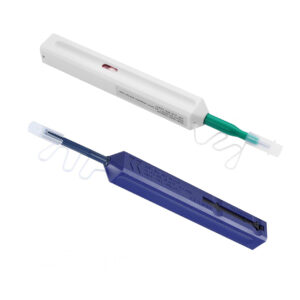
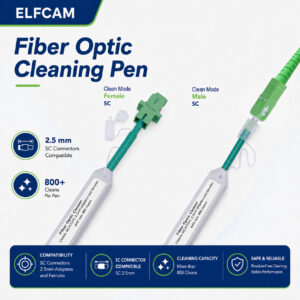
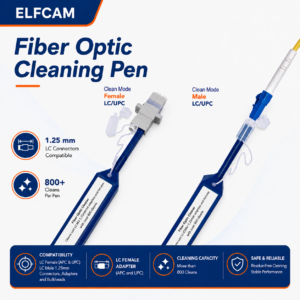
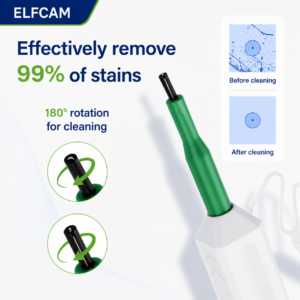
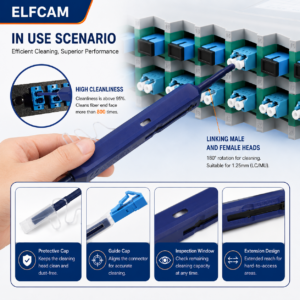
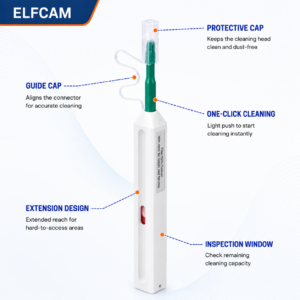
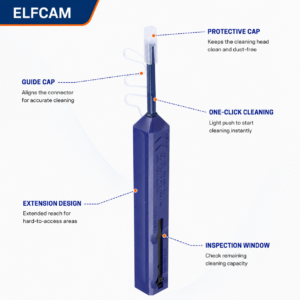
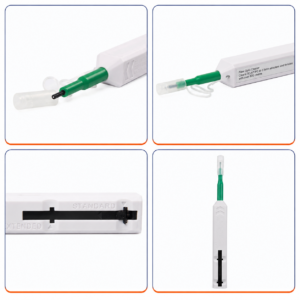
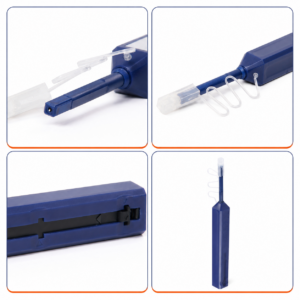
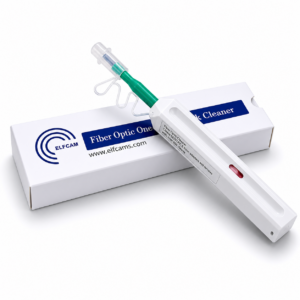
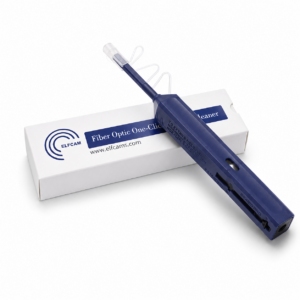
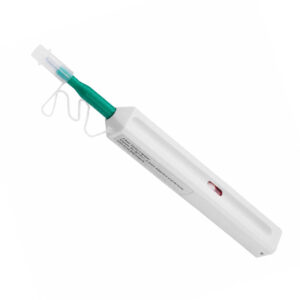
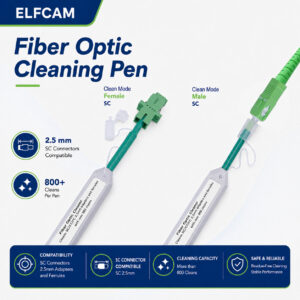
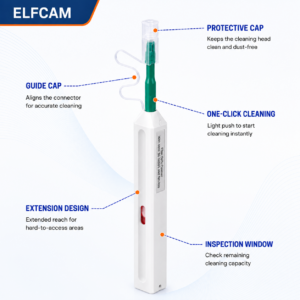
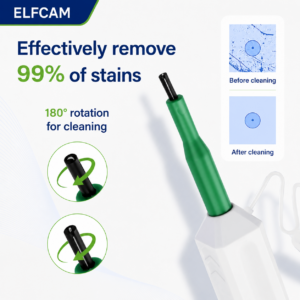
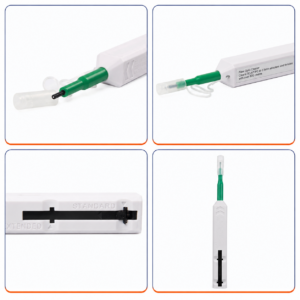
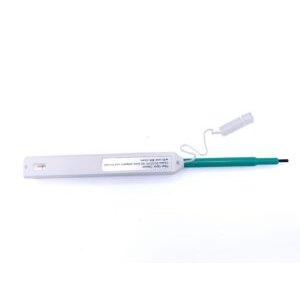
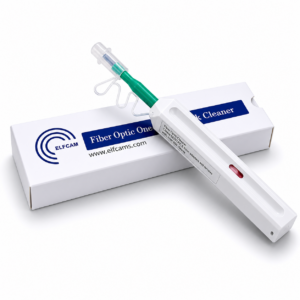
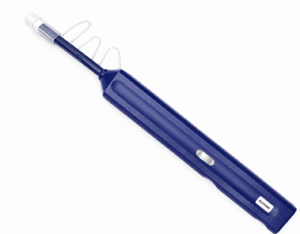
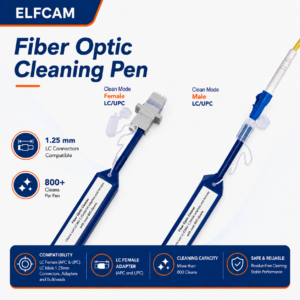
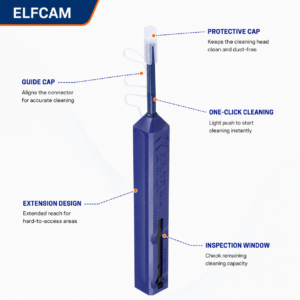
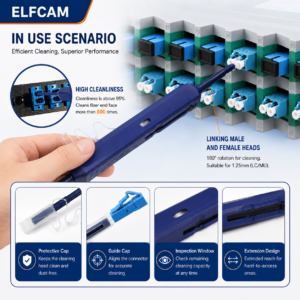
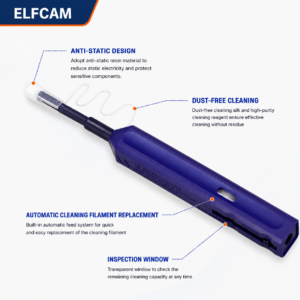
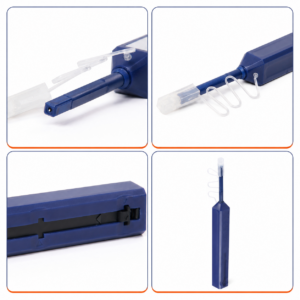
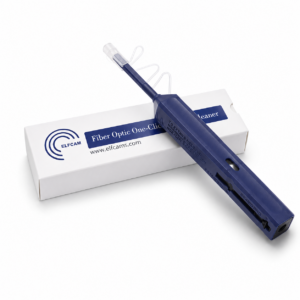
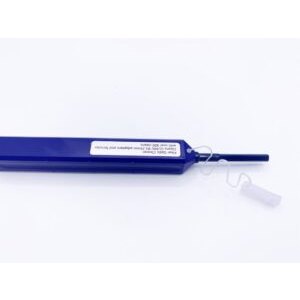
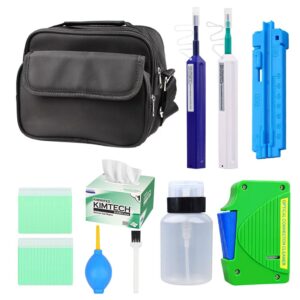
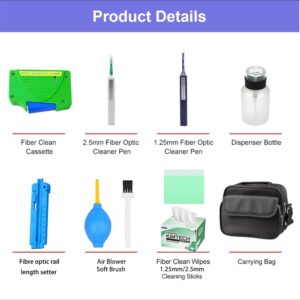
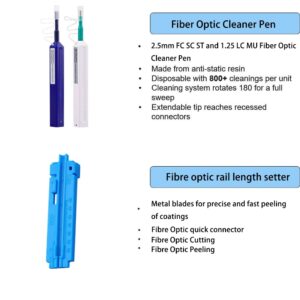
The one-click cleaning pen (Tip-Pen) is the reference tool for dry cleaning. It contains a microfiber cloth strip that advances one notch with each actuation, always guaranteeing a clean surface. A pen lasts 750 to 1000 cleanings. Instructions for use:
- Remove the protective cap from the connector
- Insert the pen tip into the female connector (or place it on a male connector)
- Actuate the plunger once with a firm, steady motion
- Inspect under the microscope — if clean, reconnect immediately
Tip
Tip-Pen pens come in two formats: for female adapters (LC, SC, FC, ST, MPO) and for male connectors. Make sure to choose the right format and the right size (1.25 mm for LC, 2.5 mm for SC/FC/ST).

Wet cleaning — method for oily contamination
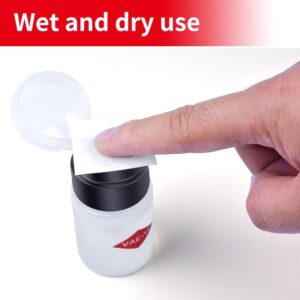
Reserved for greasy contamination or stubborn residue. The correct sequence is always: wet then dry. Never let the alcohol dry on the ferrule.
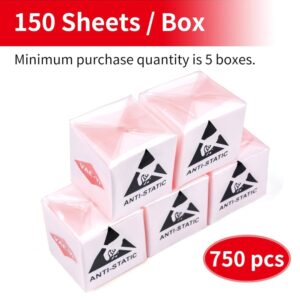
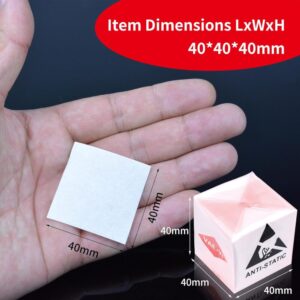
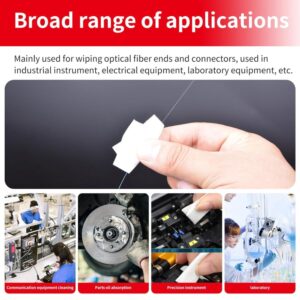
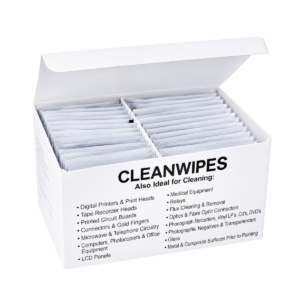
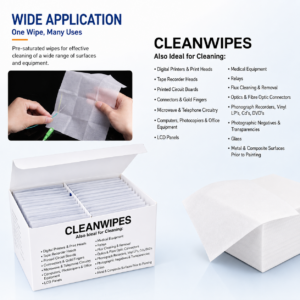
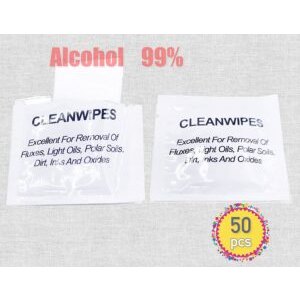
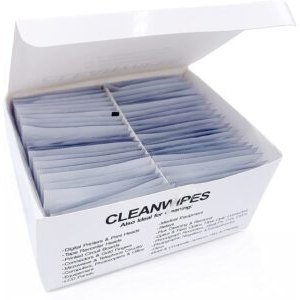
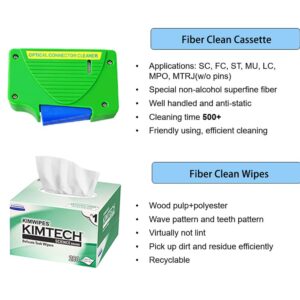
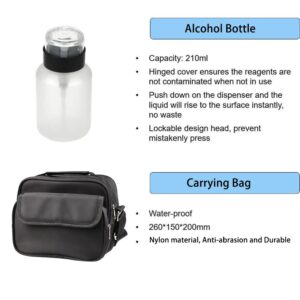
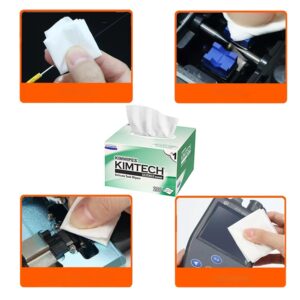
- Step 1 — Apply a few drops of isopropyl alcohol (IPA) at > 99% to a lint-free fiber cleaning paper
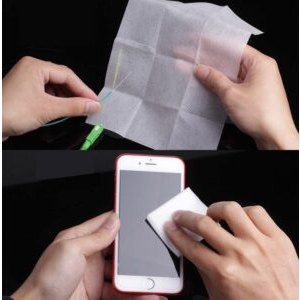
- Step 2 — Wipe the ferrule with a linear motion (not circular), keeping the fiber perpendicular to the paper
- Step 3 — Repeat immediately with a dry paper to absorb the alcohol before evaporation
- Step 4 — Inspect under the microscope before any reconnection
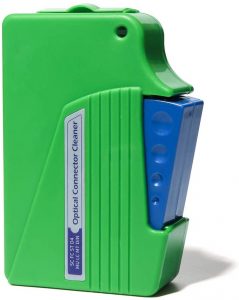
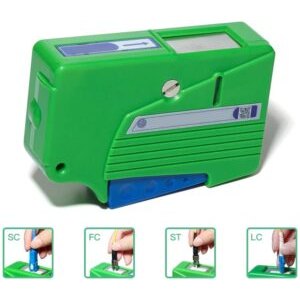
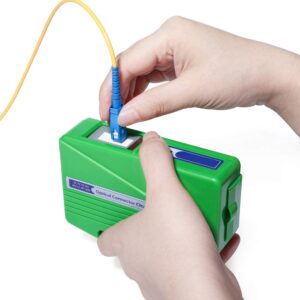
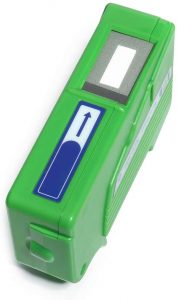
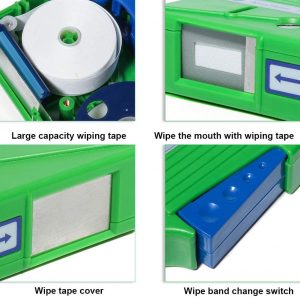
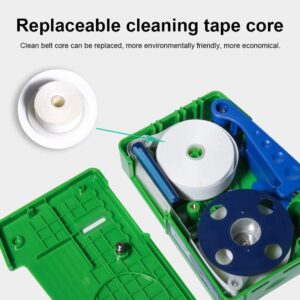
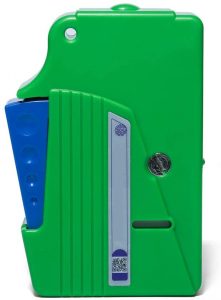
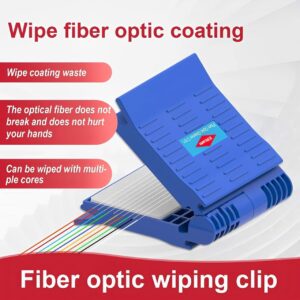
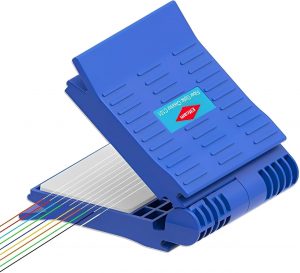
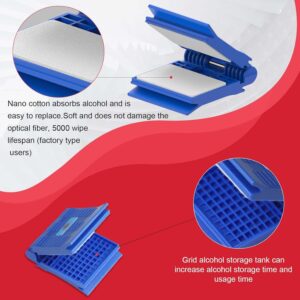
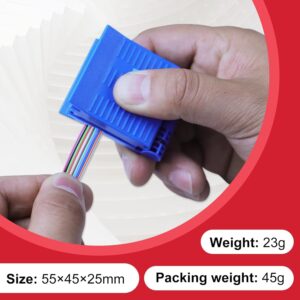
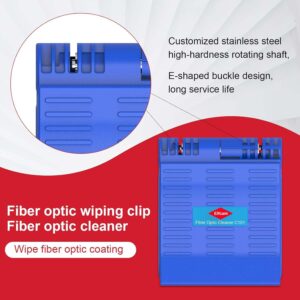
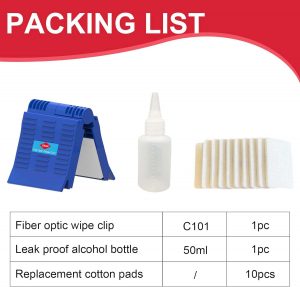
For female connectors (adapters), use a mechanical cleaning cassette or a wiping clip that allows the inside of the adapter to be cleaned in a single motion.
Cleaning by connector type: LC, SC, FC, MPO
Each connector type has its mechanical specifics that influence the choice of tool.
LC connectors (1.25 mm)
The most common in data center networks and high-speed FTTH (10G, 25G, 100G). The small 1.25 mm ferrule requires LC-specific Tip-Pen pens. Note: duplex LC connectors are very close to each other — always clean both, even if only one is faulty.
SC connectors (2.5 mm)
The dominant standard in French operator FTTH (green SC/APC or blue SC/UPC). The larger 2.5 mm ferrule is more robust but also more exposed. SC pens and cleaning boxes with a 2.5 mm opening are suitable. Do not confuse SC/APC and SC/UPC — the polishing angle differs (8° for APC), which affects inspection methods.
FC connectors (2.5 mm)
Used in measurement equipment (OTDR, optical sources) and older networks. Same 2.5 mm ferrule as the SC. The screw locking of the FC makes reconnection slower but more secure — ideal for test equipment that is connected/disconnected frequently.
MPO/MTP connectors
Multi-fiber connectors (8, 12 or 24 fibers in a row). Cleaning is more complex: a specific MPO pen is required, and inspection requires a microscope with an MPO adapter. All the fibers in the row must be clean simultaneously — a single contaminated fiber degrades the whole bundle.
Fiber optic cables clean on delivery
- SC/APC, LC/UPC, SC/UPC patch cords — Delivered with protective caps
- Adapters and couplers — Protected from the factory
Inspection with an optical microscope — an essential step
Visual inspection with the naked eye is not enough. Contamination in zone A (core, 0–25 µm) is invisible without ×200 magnification minimum. The fiber optic microscope — or videoscope — is the tool that confirms the effectiveness of the cleaning before reconnection.
The inspection criteria follow the IEC 61300-3-35 standard:
- Zone A (core): 0–25 µm — zero contaminant, zero scratch
- Zone B (inner cladding): 25–120 µm — no scratch > 5 µm nor contaminant > 10 µm
- Zone C (outer cladding): 120–250 µm — defects accepted if non-adherent
- Zone D (epoxy): > 250 µm — defects freely accepted
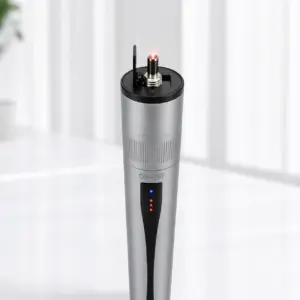
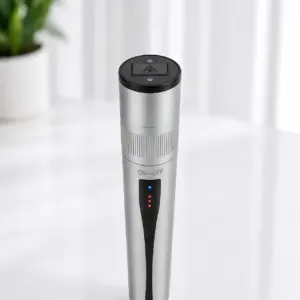
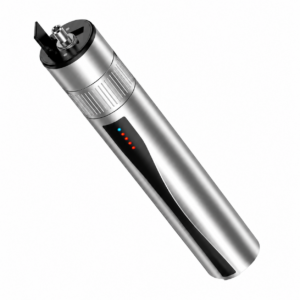
Modern portable microscopes have a built-in camera and a WiFi or USB output to view the ferrule on a smartphone or PC. Some models incorporate an automatic IEC 61300-3-35 analysis and directly display a pass/fail verdict.


7 common mistakes that degrade your connectors
These mistakes are regularly observed in the field. Each may seem trivial but has measurable consequences on performance.
- Using 70% alcohol (pharmaceutical alcohol) — Contains 30% water and additives. Leaves residue. Use only IPA > 99% or a dedicated fiber solution.
- Letting alcohol dry on the ferrule — Mineral salts crystallize and adhere strongly. Always wipe with a dry support immediately after the solvent.
- Reusing a cleaning cloth or paper — Each wiping surface is used only once. Reusing redistributes contaminants rather than removing them.
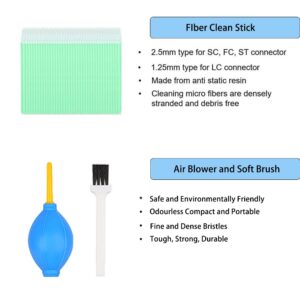
- Blowing with the mouth — Breath deposits moisture and micro-droplets of saliva. Use a compressed dry air blower or a dust-removal bulb.
- Touching the ferrule with the fingers — Skin oils contaminate it immediately. Handle connectors by the connector body, never by the ferrule.
- Storing connectors without a protective cap — Even laid flat on a clean desk, an unprotected connector collects dust within a few hours. Always recap.
- Cleaning without inspecting afterwards — A cleaning that seems correct may move a contaminant without removing it. Microscope inspection after cleaning is the only way to validate.
Recommended maintenance frequency and protocol
The cleaning frequency depends on the environment and the type of installation. Here are the practical recommendations drawn from our field deployments.
Before every connection (absolute rule)
Always clean both faces of a connection (male connector AND female adapter) before any commissioning. This rule applies even to new cables taken out of their packaging — the ferrules may have been contaminated during manufacturing or transport.
Data center environments (rack, patch panel)
Inspection and cleaning every 6 to 12 months for permanent connections. After each cabling change (addition, move, replacement). Filtered-air and positive-pressure environments limit dust contamination.
Outdoor or industrial environments
Cleaning every 3 to 6 months for connections exposed to dust, vibration or significant temperature fluctuations. Splice closures and street cabinets require special attention when opened.
Measurement equipment (OTDR, optical sources)
Clean the device's optical port before and after each measurement session. OTDRs are particularly sensitive because their FC/PC port is used several times a day. A contaminated OTDR port distorts reflectance measurements.
Comparison of fiber optic cleaning tools
| Tool | Cleaning type | Compatible connectors | Lifespan | Recommended use |
|---|---|---|---|---|
| Tip-Pen 1.25 mm pen | Dry | LC, MU | 750–1000 cycles | Field, rack, FTTH |
| Tip-Pen 2.5 mm pen | Dry | SC, FC, ST | 750–1000 cycles | Field, rack, FTTH |
| MPO pen | Dry | MPO/MTP 12F, 16F, 24F | 400–600 cycles | Data center, backbone |
| Papers + IPA 99% | Wet + dry | All | Single use per paper | Oily contamination |
| Mechanical cleaning box | Dry or wet | SC, LC, FC, ST | ~500 connections | Workshop, training |
| Clip-C1 wiping clip | Dry | SC/LC male | Single use | Field, quick troubleshooting |