So verbinden Sie zwei Glasfaserkabel — 3 Methoden
Inhalt
Müssen Sie zwei Glasfaserkabel verlängern, reparieren oder verbinden? Es gibt drei Hauptmethoden, jede mit eigenen Vor- und Nachteilen. Dieser Artikel erklärt, wann und wie Sie jede einsetzen — vom Fusionsspleißen (mit der höchsten Leistung) bis zum mechanischen Koppler (am einfachsten, ohne Spezialwerkzeug).
Warum zwei Glasfasern verbinden?
Häufige Situationen, die eine Verbindung erfordern:
- Verlängerung: das vorhandene Kabel ist zu kurz, um das Gerät zu erreichen
- Reparatur: das Kabel ist durchtrennt oder beschädigt, die Verbindung muss wiederhergestellt werden
- Steckverbinderwechsel: von SC auf LC oder von APC auf UPC umsteigen
- Installation: Terminierung eines Mehrfaserkabels mit Pigtails
Jede Verbindung fügt dem Signal Verlust hinzu. Ziel ist es immer, diesen Verlust zu minimieren — das unterscheidet die drei Methoden.
Methode 1 — Fusionsspleißen (maximale Leistung)
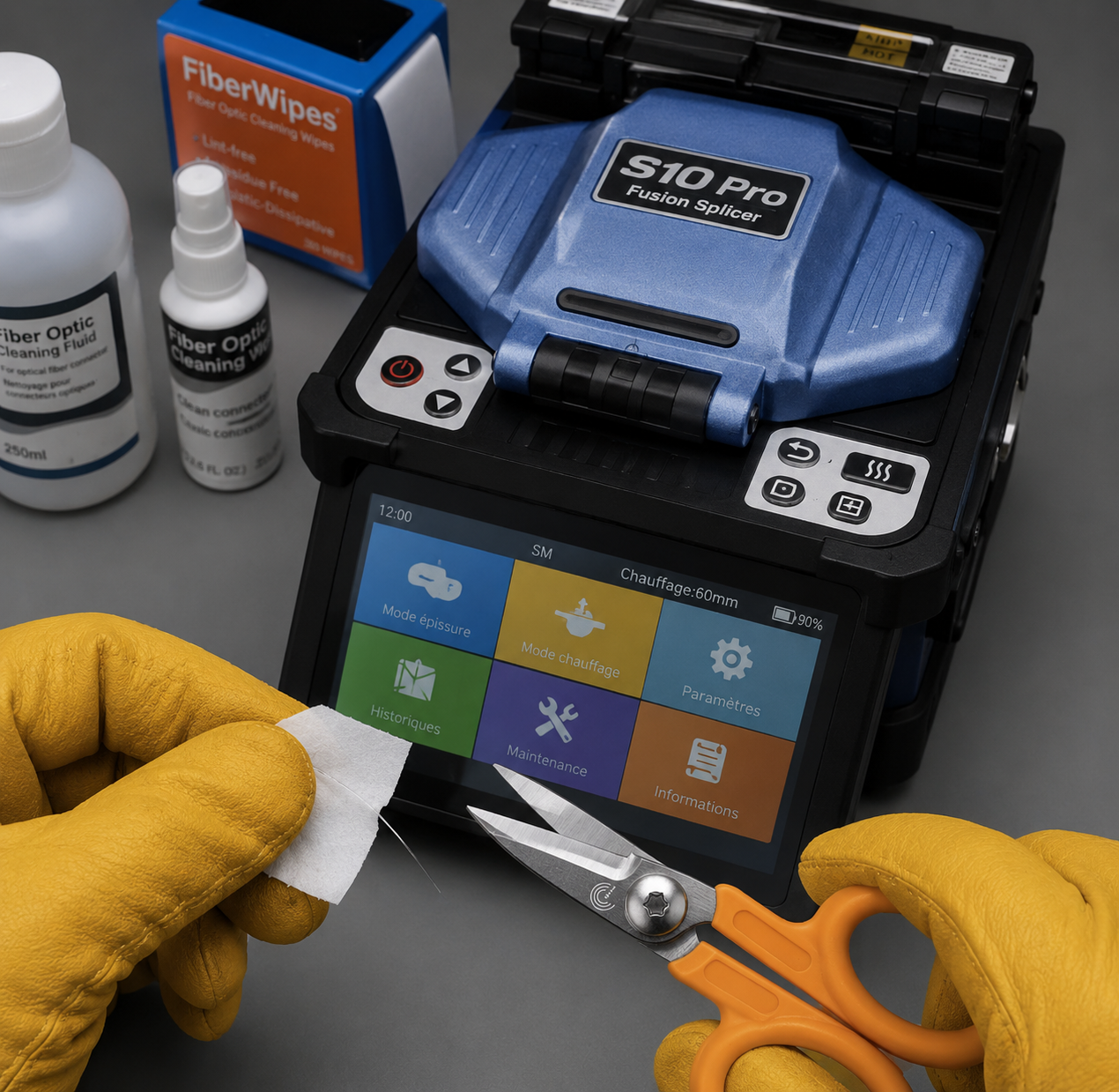
Das Fusionsspleißen ist die professionelle Standardmethode. Ein Spleißgerät richtet die beiden blanken Fasern unter dem Mikroskop aus und verschmilzt sie dann mit einem elektrischen Lichtbogen. Das Ergebnis ist eine dauerhafte, nahezu unsichtbare Verbindung mit einem Verlust von nur 0,02 bis 0,05 dB.
Schritte des Spleißens
- Abisolieren: den Schutzmantel an jedem Ende auf ca. 3 cm entfernen
- Reinigen: die blanke Faser mit IPA-Alkohol abwischen
- Brechen: die Faser mit einem Präzisions-Cleaver rechtwinklig schneiden
- Positionieren: beide Fasern in das Spleißgerät einlegen, das sie automatisch ausrichtet
- Verschmelzen: das Spleißgerät löst den Lichtbogen aus und verschmilzt die Kerne
- Schützen: einen Schrumpfschlauch aufschieben und erhitzen
Wann sollte man spleißen?
Für jede dauerhafte Installation: FTTH-Baustelle, Netzwerkraum, Patchfeld. Es ist die einzige akzeptable Methode für Langstreckenverbindungen, bei denen jedes dB zählt.
Methode 2 — Mechanischer Koppler (ohne Spleißen, Plug & Play)
Die einfachste Methode: zwei vorkonfektionierte Kabel über einen Koppler (auch Adapter genannt) verbinden. Der Koppler richtet die beiden Ferrulen der Steckverbinder mit einer Zirkonia-Hülse aus.
- Typischer Verlust: 0,2–0,5 dB pro Verbindung
- Benötigtes Werkzeug: keines — manuelles Einstecken
- Reversibel: ja, kann ab- und wieder angesteckt werden
- Steckverbinder: SC↔SC, LC↔LC, SC↔LC (hybrid), FC, ST
Elfcam-Koppler und vorkonfektionierte Kabel
- Glasfaserkoppler mit Zirkonia-Hülse — SC/APC, LC/UPC, alle Typen
- Vorkonfektionierte Glasfaserkabel — Patchkabel SC/APC, LC, sofort einsatzbereit
- OTO-Kits + Kabel — Faserverlängerung ohne Spleißen
Methode 3 — Mechanische Spleißung
Die mechanische Spleißung richtet zwei blanke Fasern in einem mit Indexgel gefüllten Kunststoffgehäuse aus. Keine Fusion, kein Strom — nur eine mechanische Ausrichtung.
- Typischer Verlust: 0,1–0,5 dB
- Benötigtes Werkzeug: Cleaver + mechanisches Spleißwerkzeug
- Vorteil: günstiger als ein Spleißgerät, geeignet für Notreparaturen
- Nachteil: langfristig weniger zuverlässig, empfindlich gegenüber Feuchtigkeit
Vergleichstabelle der 3 Verbindungsmethoden
| Kriterium | Fusionsspleißen | Mechanischer Koppler | Mechanische Spleißung |
|---|---|---|---|
| Verlust | 0,02–0,05 dB | 0,2–0,5 dB | 0,1–0,5 dB |
| Werkzeug | Spleißgerät + Cleaver | Keines | Cleaver + Spleißwerkzeug |
| Werkzeugkosten | €€€ (Spleißgerät) | Kostenlos | € (Spleißwerkzeug) |
| Beständigkeit | Dauerhaft | Reversibel | Semi-dauerhaft |
| Zuverlässigkeit | Ausgezeichnet | Gut | Mittel |
| Geschwindigkeit | 2–5 Min. / Spleiß | 5 Sekunden | 5–10 Min. |
| Ideal für | Dauerhafte Installation | Verlängerung, Zuhause, Test | Notreparatur |
Für Installationen ohne Spleißen
- Elfcam-Glasfaserkonverter — integriertes SFP, 2er-Pack, kein Spleißen nötig
- Home-Fiber-Leitfaden — komplettes Heim-Glasfasernetz ohne Spleißen
- Pigtails — für Installationen mit professionellem Spleißen