4G vs LTE : what's the difference and what to choose in 2026 ?
Contents
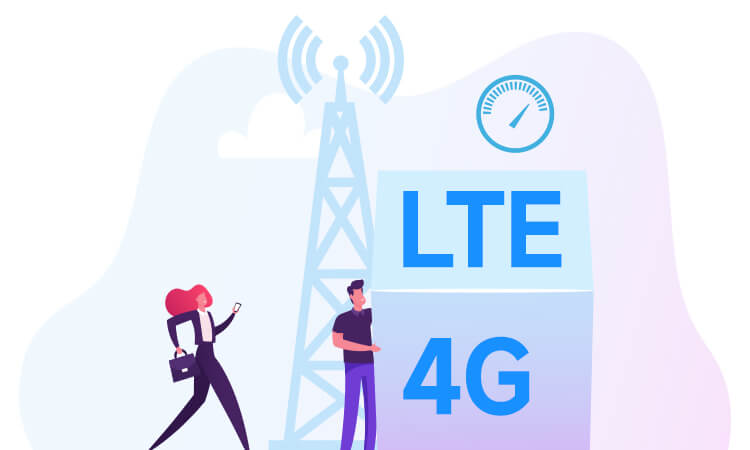
Your smartphone sometimes shows 4G, sometimes LTE, sometimes 4G+, 4G LTE or LTE-A. In the end, it's impossible to tell whether you're really on "full" 4G or in a degraded mode. This confusion fostered by carriers is no accident : it conceals throughput differences ranging from single to double.
This guide clarifies once and for all the difference between 4G, LTE, 4G+ and LTE-Advanced, their real throughputs, and the impact on your uses (phone, mobile TV, 4G/5G CPE for poorly covered homes).
What is 4G ?
4G refers to the fourth generation of mobile telephony, defined by the ITU (International Telecommunication Union) in the IMT-Advanced standard (2008). The original criteria were very strict :
- 1 Gbps in fixed use (stationary, pedestrian)
- 100 Mbps in high mobility (train, car)
- Transition to all-IP (end of circuit-switched voice)
- Advanced OFDMA and MIMO protocols
These criteria were so demanding that no network deployed in 2010-2012 actually met them. Carriers obtained from the ITU the right to call intermediate technologies "4G", notably LTE.
What is LTE ?
LTE stands for Long Term Evolution. It is a standard developed by 3GPP from 2008 (Release 8), positioned as a direct evolution of 3G HSPA+. Characteristics :
- Max theoretical throughput : 100 Mbps downlink / 50 Mbps uplink (20 MHz channel)
- OFDMA architecture (downlink) + SC-FDMA (uplink)
- MIMO 2×2 or 4×4
- Latency < 100 ms
Strictly speaking, LTE is therefore closer to 3.9G than to true 4G. But commercially, carriers merged the two names as early as 2012-2013 for marketing reasons. That's why your smartphone alternates between "4G" and "LTE" without you noticing any concrete difference.
4G vs LTE : the real difference
| Technology | Max theoretical throughput | Year | Equivalence |
|---|---|---|---|
| HSPA+ (3.5G/3.75G) | 21-84 Mbps | 2008-2010 | Pre-LTE |
| LTE (3.9G) | 100 Mbps | 2010-2012 | 4G Cat 3/4 |
| LTE-Advanced (true 4G) | 300 Mbps - 1 Gbps | 2013+ | 4G+, 4G Cat 6-12 |
| LTE-A Pro | 1-3 Gbps | 2016+ | 4.5G |
| 5G NR (NSA) | 1-4 Gbps | 2019+ | 5G |
| 5G SA | 4-10 Gbps | 2020+ | 5G Standalone |
In summary :
- LTE = 3.9G technically but commercially classed as 4G
- LTE-A (4G+) = true 4G in the IMT-Advanced sense
- 4G Cat 4 (~150 Mbps peak) = what 90% of smartphones display as "4G"
- 4G Cat 6 (~300 Mbps peak) = shown as "4G+" at Orange, SFR, Bouygues
- 4G Cat 12+ (~600 Mbps peak) = "4G++" or LTE-A Pro equivalent
If your smartphone shows "4G" without the "+", you're probably on LTE Cat 4 (100-150 Mbps peak). The "4G+" or "LTE-A" unlocks 300+ Mbps thanks to carrier aggregation.
And where does 5G fit in ?
5G (New Radio / NR) is the fifth generation, deployed since 2019 in France. Two main modes :
- 5G NSA (Non-Standalone) : relies on the 4G LTE core. Typical throughputs 1-2 Gbps. Massively deployed in 2020-2024.
- 5G SA (Standalone) : native 5G core, latency < 10 ms, network slicing, throughputs 2-10 Gbps. Gradual rollout 2024-2027.
See our dedicated guide : 5G NSA vs SA : the difference.
Concrete applications
1. Online mobile gaming
4G and especially LTE-A make real-time multiplayer games (Fortnite, Call of Duty Mobile, League of Legends Wild Rift) smooth. Typical latency 20-40 ms on 4G+, 10-20 ms on 5G SA — comparable to yesterday's fixed ADSL.
2. Cloud computing and live streaming
4G LTE is the backbone of live streaming (Twitch, TikTok Live, YouTube Live). With 4G+/LTE-A, a 1080p live stream at 30 fps is stable even on the move. Cloud services (Google Drive, iCloud, Office 365) become usable anywhere.
3. IoT and M2M
Beyond the consumer market, 4G LTE is used extensively for :
- Smart meters (water, gas, electricity)
- Fleet trackers and logistics
- Connected road signage
- Industrial telemetry
- Connected vehicles (eCall, remote diagnostics)
For these uses, dedicated variants exist : LTE-M (low power, IoT), NB-IoT (very low bandwidth, sensors).
4G/5G CPE for poorly covered areas
In areas where fibre is not yet eligible, 4G/5G CPE turn the cellular signal into home WiFi :
- 4G Cat 4-6 CPE : 50-150 Mbps throughput, enough for a standard household
- 4G Cat 12+ CPE : 200-400 Mbps throughput, nearly equivalent to ADSL 2/VDSL
- 5G NSA/SA CPE : 200-800 Mbps, rivals entry-level fibre
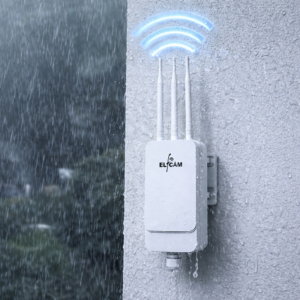
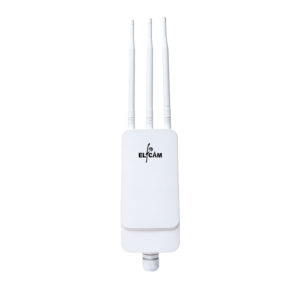
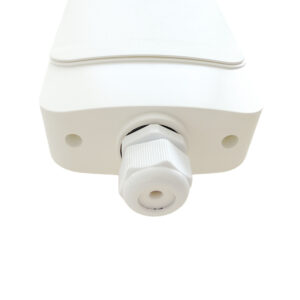
- Outdoor 4G/5G CPE : high-gain antennas, waterproof, for poorly received areas
The "4G/5G box" plans from French carriers (Orange, SFR, Bouygues, Free) cost €20-50/month with "unlimited" data (often with a fair-use cap of 100-500 GB/month).
Complement a 4G/5G CPE with WiFi 6
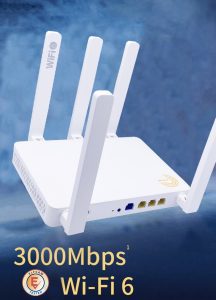
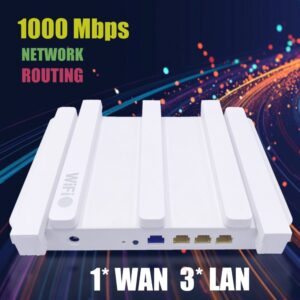
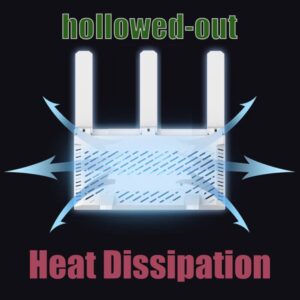
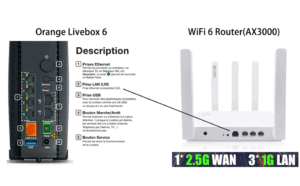
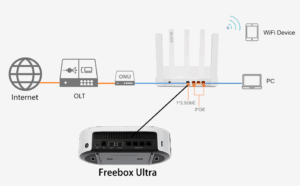
4G/5G CPE often provide basic WiFi 4/5. For genuinely modern coverage, connect a WiFi 6 Mesh AX3000 router behind the CPE in bridge mode. You keep cellular connectivity and gain WiFi 6, OFDMA and mesh coverage. Round it off with an outdoor IP67 WiFi 6 AP for the garden and outbuildings.
WiFi hardware to complement a CPE
- WiFi 6 Mesh AX3000 router — links your 4G/5G CPE with modern WiFi 6
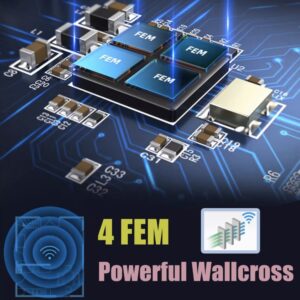
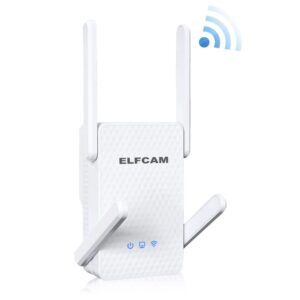
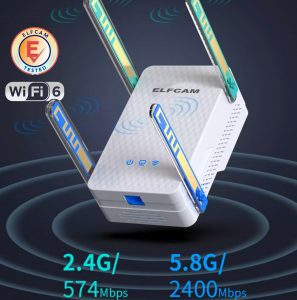
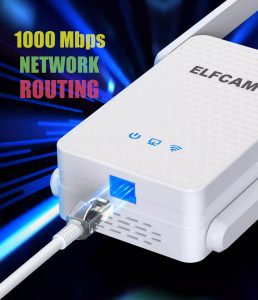
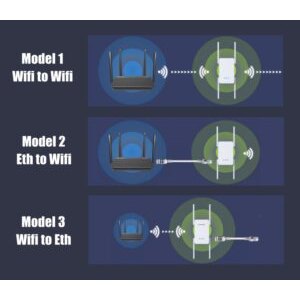
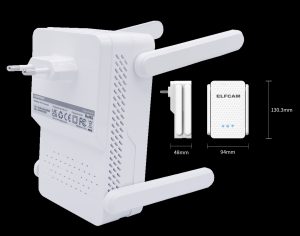
- WiFi 6 AX3000 repeater — extends coverage without Ethernet
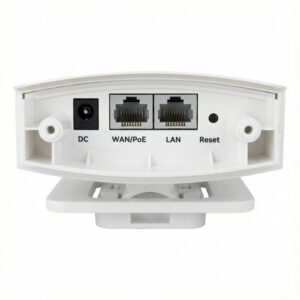
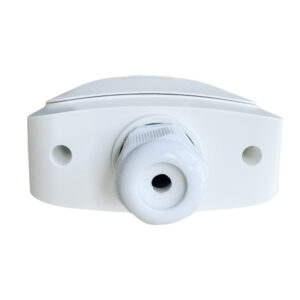
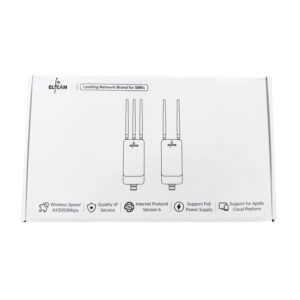
- Outdoor IP67 WiFi 6 AX3000 AP — covers garden, outbuilding, mobile home
- Cat 6/7 Ethernet cables — link the CPE and the WiFi 6 router
- PoE switches — power outdoor APs and cameras

FAQ — 4G vs LTE
1Why does my smartphone show "LTE" rather than "4G" ?
24G and 4G+, what's the difference ?
- 4G Cat 4 : 1 channel of 20 MHz = 150 Mbps max
- 4G+ Cat 6 : 2 channels of 20 MHz = 300 Mbps max
- 4G+ Cat 9 : 3 channels = 450 Mbps max
- 4G+ Cat 12 : 3 channels + 256-QAM = 600 Mbps max
3Will 4G be shut down ?
4What real 4G throughput can you expect in France ?
- Average downlink : 80-120 Mbps
- Average uplink : 15-30 Mbps
- Latency : 30-50 ms
- In rural areas : 20-60 Mbps downlink
5Does my 4G/5G box replace ADSL ?
6Can I use my smartphone SIM card in a 4G CPE ?
7Is an external 4G antenna really useful ?
- Improve throughput by 2-5×
- Stabilise the connection in a fringe area
- Reduce latency
8Which Elfcam accessories complement a CPE ?
In summary
4G and LTE are often synonymous in everyday language, but technically LTE is a 3.9G, true 4G being LTE-Advanced (4G+). For your uses :
- Smartphone : 4G+ is enough for all everyday uses (video calls, streaming, mobile gaming)
- Home box in a fibre-free area : 4G+ or 5G NSA CPE, complemented by a WiFi 6 mesh router
- Low-power IoT : LTE-M or NB-IoT (not covered by CPE)
For a complete modern setup, complement your 4G/5G CPE with Cat 6 Ethernet cable, a PoE switch and an outdoor IP67 AP to cover the whole home + outdoors.